


How to choose the right Wakesurf Board
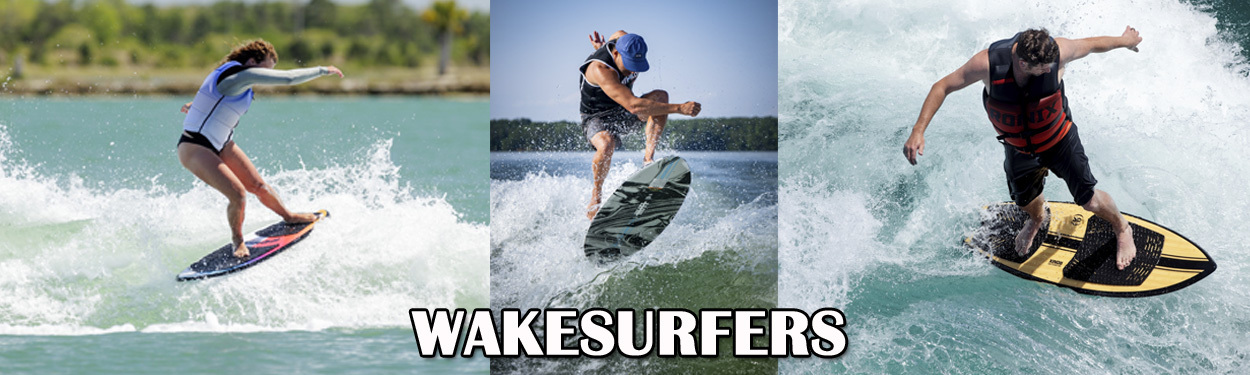
Before your read this article keep in mind that there are many factors that can greatly effect your riding experience. Unlike wakeboards or water skis, you will need to take into account the rider size, your ability level, the style of riding you are trying to achieve, the size of the wake that is pushing you, the speed of the boat and many other factors. You best bet is to come into our store or call us and speak to one of our experienced sales associates. They can help to guide you to make an informed decision.
A board that feels amazing for one rider can feel completely wrong for the next. That is why learning how to choose a wakesurf board comes down to more than picking a cool graphic or grabbing whatever your friend rides. Your weight, your boat’s wave, and the kind of riding you actually want to do all matter.
If you are buying for a family, this choice gets even more important. The right board makes it easier for new riders to get up, stay in the pocket, and build confidence fast. For more experienced riders, the right shape can mean better speed, cleaner turns, and more freedom to start working on spins, slashes, or airs.
How to choose a wakesurf board for your riding style
The first question is simple: do you want a surf-style board, a skim-style board, or something in between?
Surf-style boards are usually thicker, more buoyant, and easier to ride for beginners and casual lake riders. They carry speed well, feel stable underfoot, and generally make it easier to recover if you drift back on the wave. If your goal is carving, flowing turns, and a more traditional surf feel, this is where most riders should start.
Skim-style boards ride lower on the water and feel looser. They are typically better for surface tricks, spins, and a more playful feel. The trade-off is that they can be less forgiving, especially for new riders who are still learning how to stay in the wave.
Then there are hybrid boards. These are great for riders who want a little of both - enough drive and stability to feel comfortable, but enough looseness to progress into more technical riding. For a lot of intermediate riders, hybrids hit the sweet spot.
If you are unsure, surf-style is the safest pick for a first board. It gives most riders the easiest learning curve and works well across a wider range of boat wakes.
Start with rider weight, not just board length
One of the biggest mistakes people make when figuring out how to choose a wakesurf board is focusing only on length. Length matters, but volume and float matter just as much.
A heavier rider usually needs more board under them to stay fast and stable. A lighter rider can often ride a shorter board without losing push from the wave. Two boards might both be 4'8", but if one has more thickness and volume, it can ride very differently.
That is why manufacturer size charts are worth paying attention to. They are not perfect, because boat wave size changes everything, but they are a strong starting point. If you are shopping for a family and want one board that several people can share, lean toward a slightly larger, more forgiving shape. It will usually accommodate a wider range of rider sizes and skill levels.
If you are right between sizes, think about your goal. Want more stability and easier starts? Size up. Want quicker response and a more playful feel? Size down, as long as your wave has enough push to support it.
Boat wave matters more than many buyers expect
A powerful surf boat with good ballast can support smaller, more performance-driven boards. A modest wave often pairs better with a larger board that creates speed more easily.
That is why advanced riders on smaller waves sometimes still choose boards with more volume. It is not about skill level alone. It is about matching the board to the wave you actually have every weekend, not the one you wish you had.
Pay attention to shape and what it does on the water
Board shape affects speed, control, and forgiveness. This is where buying guidance really helps, because small design differences create big changes in feel.
A wider board will usually feel more stable and generate speed easily. That makes it great for beginners, larger riders, and families who want a board that is fun right away. The trade-off is that very wide boards can feel less nimble edge to edge.
A narrower board can feel quicker and more responsive, but it may also be less forgiving. Riders who like sharp turns and more performance often appreciate that trade-off.
Rocker also matters. A flatter rocker line usually creates more speed and efficiency, which helps riders stay in the pocket. More rocker can make the board feel looser and more maneuverable, but sometimes at the cost of raw drive.
Tail shape changes the release and control of the board. Squash tails tend to feel stable and balanced. Swallow tails often give a mix of grip and speed. Pin tails can hold a clean line through turns but may feel more specialized. None of these are universally better. They just serve different preferences.
Fin setup changes the personality of the board
Fins are one of the easiest ways to tune how a board rides. More fin or larger fins usually mean more grip, more tracking, and a more planted feel. That is great for learning and for riders who like strong carving control.
Smaller fins or fewer fins make the board feel looser. That can be fun for advanced riders, but it can also make a first session a lot more frustrating.
For new riders, a board with a stable fin setup is usually the best call. As skills improve, removable or adjustable fin setups let you experiment without buying a completely new board.
Skill level should guide your decision
Beginners do better on boards that help them succeed quickly. That usually means more volume, more stability, and a shape that builds speed without a lot of effort. A forgiving surf-style board is often the best value because it shortens the learning curve and keeps people coming back for more sets.
Intermediate riders can start narrowing the choice based on feel. This is the stage where you may know whether you want more drive, more looseness, or a board that bridges family fun and personal progression.
Advanced riders tend to shop with more specific goals. Maybe you want a fast board for aggressive carving, a skim shape for spins, or a premium construction with lighter weight and sharper response. At that level, subtle differences become worth paying for.
The key is being honest about where you are. Buying too advanced too early often leads to less fun, not more performance.
Construction affects price and performance
Not every wakesurf board is built the same, and construction is a big reason prices vary.
Entry-level boards are often durable, affordable, and ideal for family use. They may be a little heavier and less refined in feel, but they hold up well and deliver solid value. For many recreational riders, that is exactly the right choice.
Higher-end constructions are usually lighter, more responsive, and more performance-focused. You will often notice better energy transfer, quicker handling, and a more lively feel underfoot. The trade-off is price, and sometimes a little less tolerance for rough treatment around the boat.
If the board will be shared by kids, guests, and first-timers all summer, durability matters. If you are chasing progression and riding multiple sets a week, premium construction may be worth it.
One board or a family quiver?
A lot of shoppers want one board that does it all. That is possible, but there are limits.
If your group includes different rider sizes and skill levels, the best single-board solution is usually a larger surf-style or hybrid board. It gives beginners a stable platform while still being fun for stronger riders. You may give up some top-end performance, but you gain versatility.
If you have a mix of serious riders and beginners, two boards often make more sense than one premium board that only suits one person well. A forgiving all-around board for the family and a more specialized board for progression is often the smarter long-term setup.
That is especially true when you consider value. Buying the right board once is cheaper than replacing the wrong one after a few weekends.
Common buying mistakes to avoid
The biggest mistake is buying based only on looks or price. A great deal is only a great deal if the board fits the rider and the wave.
Another common issue is sizing too small because the board looks more advanced. Small boards can be a blast in the right hands and behind the right boat, but they make learning harder for many riders.
It is also easy to overestimate how specialized you need to go. Plenty of riders have more fun on a forgiving, fast, all-around shape than on an ultra-specific performance board. Fun on the water beats theory every time.
If you want real help comparing shapes, sizes, and brands, this is exactly where a specialty shop like Ride The Wave can save you time. Getting pointed toward the right board the first time means more riding and less second-guessing.
The best board is the one that matches your real-world setup
The best way to think about how to choose a wakesurf board is to match three things: the rider, the wave, and the riding style. Start with weight and skill level, then narrow it down by whether you want a surf, skim, or hybrid feel. After that, shape, fins, and construction help fine-tune the ride.
You do not need the most expensive board or the most advanced shape to have a great summer behind the boat. You just need a board that works with your crew, your goals, and the wave you are actually riding. Get that part right, and every set gets a whole lot better.
Explore Popular Articles
-
How to choose the right Wakesurf Board
Jun 16th 2026Before your read this article keep in mind that there are many factors that can greatly effect your
-
The Best Wakeboard Package for Beginners
May 22nd 2026That first wakeboard set matters more than most people think. Start with the wrong board and learni
-
More than a Water Sports Store we are a Destination for Water Sports Enthusiasts
May 23rd 2025We are stocked up for the season with all of the fun that you could need for the summer. We have